Kilimanjaro Climb Medical Rescue: Professional Emergency Response
Medical rescue during Kilimanjaro climbs delivers coordinated emergency care for altitude illness, injuries, or medical crises. Combining ground protocols with rapid helicopter medevac, these services ensure professional support in the mountain’s challenging environment.
Kilimanjaro Climb Medical Rescue: Professional Emergency Response
Kilimanjaro climbs push human limits with sustained high-altitude exposure and physical exertion over multiple days. While reputable operators emphasize prevention, medical emergencies remain possible—ranging from severe altitude sickness to traumatic injuries or sudden health events. Effective medical rescue integrates immediate on-trail care with advanced evacuation capabilities.
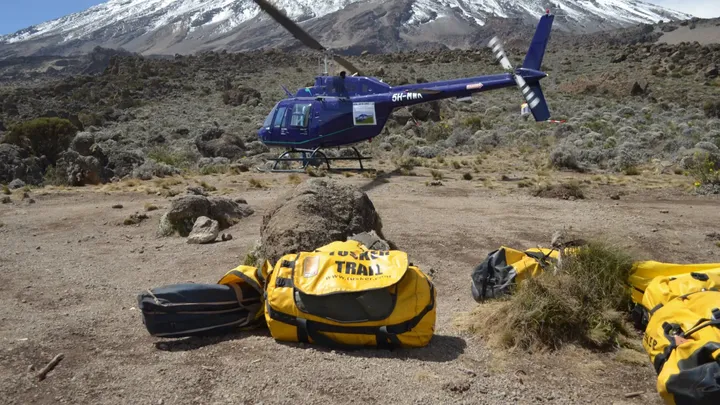
Professional services provide structured response: trained guides as first responders, operator coordination centers, and specialized helicopter medevac. KiliFlying Air forms the aerial component, executing rapid, medically equipped evacuations with proven expertise.
This comprehensive guide explores medical rescue needs during climbs, common emergency scenarios, ground response capabilities, helicopter integration, coordination protocols, route-specific considerations, equipment standards, and real-world examples of successful interventions.
Common Medical Emergencies on Kilimanjaro
Certain conditions frequently require professional rescue:
- Severe altitude illness. Progression to High Altitude Pulmonary Edema (HAPE) or Cerebral Edema (HACE)—most common rescue triggers.
- Traumatic injuries. Slips, falls on scree, ice, or rocky terrain causing fractures, head trauma, or immobility.
- Cardiac events. Heart attacks or arrhythmias exacerbated by hypoxia and exertion.
- Neurological issues. Strokes, seizures, or severe dehydration leading to confusion.
- Exhaustion/hypothermia. Cases preventing independent descent in adverse conditions.
- Summit-day crises. Critical incidents during the final high-altitude push.
These scenarios demand layered medical rescue capability.
Ground-Level Medical Rescue Capabilities
First response begins on the trail:
- Guide training. Wilderness first aid, altitude medicine certification, and emergency scenario drills.
- Immediate treatment. Oxygen administration, medications (acetazolamide, dexamethasone, nifedipine), portable hyperbaric bags.
- Monitoring tools. Pulse oximeters, blood pressure cuffs, thermometers for ongoing assessment.
- Stabilization equipment. Stretchers, wheel systems for lower elevations, thermal protection.
- Communication. Radio networks and satellite phones for base alerts.
These measures handle many cases but have limits at extreme altitude.
Helicopter Medevac Integration
When ground response is insufficient:
- Rapid descent. Thousands of feet in minutes versus hours/days on foot.
- High-altitude access. Reaching Barafu, Kosovo, crater, and summit zones.
- Full medical support. In-flight oxygen, IV fluids, monitoring, and critical interventions.
- Direct hospital transfer. To advanced facilities in Moshi, Arusha, or Nairobi.
KiliFlying Air’s specialized fleet makes this aerial layer reliable and effective.
Medical Rescue Coordination Protocol
Structured activation ensures efficiency:
- Guide assesses and initiates on-site care
- Alert to operator base with detailed status and GPS
- Medical advisory confirms evacuation level
- Insurance authorization for helicopter deployment
- KiliFlying Air launches and executes mission
- Post-rescue hospital handover and follow-up
Pre-existing partnerships streamline steps for minimal delay.
Medical Rescue Across Climbing Routes
Consistent coverage regardless of trail:
- Machame, Lemosho, Umbwe: Excellent high-camp helicopter access
- Northern Circuit, Rongai: Remote-zone protocols with reliable response
- Marangu: Hut system enabling faster ground support when appropriate
- Crater overnight: Direct high-zone capability
Professional operators maintain equivalent standards route-wide.
Real-World Medical Rescue Impact
Integrated services have saved numerous lives:
- Hundreds of altitude cases reaching definitive care before permanent damage
- Trauma patients stabilized during rapid aerial transport
- Cardiac crises managed with in-flight interventions
- Successful rescues across all elevation zones and weather conditions
This track record demonstrates the maturity and effectiveness of current medical rescue services.
Frequently Asked Questions
Medical rescue during Kilimanjaro climbs provides professional, coordinated support for emergencies. Choose operators with proven systems. Visit our Medical Evacuation page for complete details.