Emergency Descent Kilimanjaro: Critical Safety Guide
Emergency descent is the cornerstone of altitude sickness management on Kilimanjaro. When severe symptoms appear, immediate lowering of altitude is the only proven treatment—often requiring rapid helicopter airlift for the fastest, safest outcome.
Emergency Descent Kilimanjaro: Critical Safety Guide
Kilimanjaro’s rapid ascent profile—gaining nearly 4,000 meters in just days—creates a high risk of altitude-related illness. While mild Acute Mountain Sickness (AMS) often resolves with rest and medication, severe progression to High Altitude Pulmonary Edema (HAPE) or Cerebral Edema (HACE) demands immediate action. The only definitive treatment is descent to lower altitude, where oxygen availability increases and physiological recovery begins.
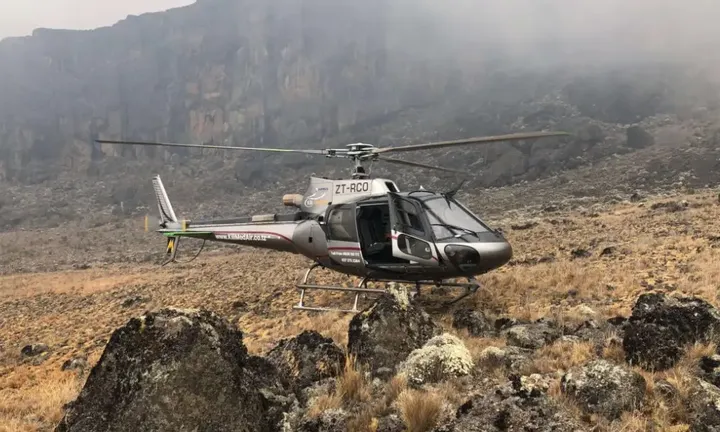
Ground descent from high camps can take 6–12 hours or longer, especially with fatigued climbers. Emergency helicopter airlift accelerates this process dramatically, dropping patients thousands of feet in minutes while providing in-flight medical care. KiliFlying Air specializes in these critical emergency descents, delivering the fastest possible response for climbers in distress.
This comprehensive guide explains when emergency descent is required, how fast it must happen, ground vs. helicopter options, symptom recognition, prevention strategies, and how professional airlift ensures the best possible outcomes on Kilimanjaro.
When Emergency Descent Becomes Essential
Descent is mandatory in these situations:
- Moderate AMS unresponsive to rest and medication. Persistent headache, vomiting, and weakness after 24–48 hours at altitude.
- Any signs of HAPE. Shortness of breath at rest, rapid breathing, cough (possibly pink froth), extreme fatigue.
- Any signs of HACE. Confusion, staggering gait (ataxia), severe headache, hallucinations, or altered consciousness.
- Rapid deterioration. Symptoms worsening despite oxygen and medication.
- Inability to descend safely. Climber too weak or confused to walk down independently.
Waiting in these cases risks irreversible damage or death—immediate descent is non-negotiable.
How Fast Must Emergency Descent Happen?
Time is critical in severe altitude illness:
- HAPE/HACE progression can become fatal within hours without descent
- Every hour delayed significantly worsens prognosis
- Ideal window: descent within 1–2 hours of severe symptoms
- Ground descent from high camps often takes 6–12 hours—too slow for severe cases
Helicopter airlift achieves the required speed, making it the gold standard for emergency descent.
Ground Descent vs. Helicopter Airlift
Compare the two options:
| Descent Method | Time from High Camp | Suitable For | Limitations |
|---|---|---|---|
| Ground Descent | 6–12+ hours | Mild AMS, stable patients | Too slow for severe HAPE/HACE; exhausting for weak climbers |
| Helicopter Airlift | 30–60 minutes to lower altitude | Severe AMS, HAPE, HACE, trauma | Weather-dependent; requires insurance coverage |
Helicopter airlift is the clear choice for any serious emergency requiring rapid descent.
Emergency Descent Procedure
When descent is required, follow this protocol:
- Immediate action. Guide administers oxygen, medication, and halts ascent
- Alert system. Radio/satellite contact with base camp reporting symptoms and location
- Decision point. Operator and medical advisory determine ground vs. helicopter descent
- Helicopter activation. KiliFlying Air launches if rapid descent is needed
- Stabilization & descent. In-flight care during airlift to hospital
Professional operators have these protocols practiced and ready.
Prevention to Minimize Emergency Descent Risk
Reduce the need for emergency descent through:
- Longer routes for gradual acclimatization
- Slow pacing (“pole pole”) and adequate rest
- Aggressive hydration (4–5 liters daily)
- Early symptom reporting to guides
- Prophylactic medication after medical consultation
Prevention remains the best strategy, but preparedness for emergency descent ensures safety when needed.
Frequently Asked Questions
Emergency descent is your lifeline on Kilimanjaro when altitude sickness escalates. Prepare properly and descend decisively. For professional helicopter support, visit our Medical Evacuation page.