Fast Medevac Kilimanjaro: Rapid Emergency Response
In high-altitude emergencies on Kilimanjaro, speed is the decisive factor between recovery and tragedy. Fast medevac—professional helicopter medical evacuation—delivers the critical rapid response needed when altitude illness, trauma, or medical crises strike.
Fast Medevac Kilimanjaro: Rapid Emergency Response
Kilimanjaro’s extreme elevation and remote terrain create a unique challenge for emergency care. Severe altitude-related conditions like High Altitude Pulmonary Edema (HAPE) or Cerebral Edema (HACE) can progress from concerning to life-threatening in hours. Traumatic injuries from falls or rockfall add further urgency. In these scenarios, ground evacuation—often taking 8–12 hours or more—is simply too slow.
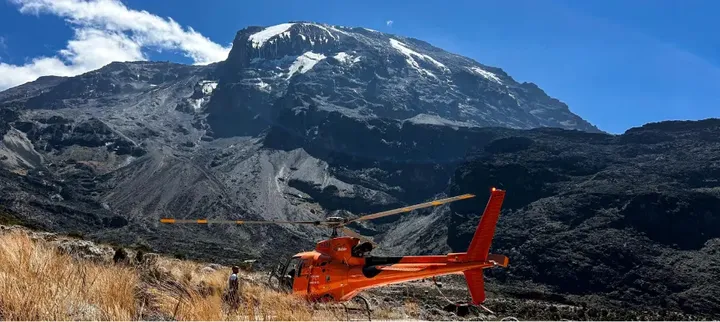
Fast medevac changes this equation dramatically. Specialized helicopters reach high camps in minutes, providing immediate stabilization and descent of thousands of feet almost instantly. KiliFlying Air has refined every element of this process—fleet, crew, basing, and coordination—to achieve consistently rapid response times that have saved numerous lives on the mountain.
This in-depth guide explores why speed is paramount in Kilimanjaro emergencies, the operational advantages enabling fast medevac, detailed response timelines, technical capabilities, coordination factors, and real-world examples of our rapid interventions.
The Critical Importance of Speed in Medevac
Medical outcomes in high-altitude emergencies are profoundly time-sensitive. Research shows that rapid descent significantly improves prognosis for HAPE and HACE patients, with delays increasing risk of permanent damage or fatality. Every hour saved translates directly to better recovery chances.
Fast medevac achieves what ground teams cannot: descent from 5,000+ meters to sea-level pressure in under an hour. This physiological relief, combined with in-flight medical care, stabilizes patients during the crucial “golden hour” of emergency medicine.
KiliFlying Air’s investment in speed-focused operations—strategic basing, 24/7 readiness, high-performance aircraft, and streamlined coordination—ensures we consistently deliver this life-saving advantage.
Achieving Industry-Leading Response Times
Our fast medevac timeline demonstrates proven efficiency:
- Alert receipt. Guide contacts 24/7 operations center via radio or satellite (immediate).
- Authorization. Direct insurer partnerships secure Guarantee of Payment in minutes.
- Launch. Helicopter airborne within 5–15 minutes of approval.
- Arrival. Reach Barafu, Kosovo, or crater zones in 30–60 minutes.
- Hospital delivery. Total time from alert to advanced care under 2 hours in optimal conditions.
These times outperform regional averages, reflecting deliberate design choices in basing, crew readiness, and process optimization.
Operational Advantages Enabling Fast Medevac
Several interconnected factors drive our rapid capability:
- Strategic forward basing. Helicopters positioned minutes from the mountain for minimal transit time.
- 24/7 crew readiness. Pilots and medical teams on immediate standby with shift rotations ensuring peak alertness.
- High-performance fleet. Airbus H125 and Bell 407 models optimized for rapid climb and high-altitude efficiency.
- Advanced avionics. GPS precision, weather radar, and night-vision extending operational windows.
- Direct insurer integration. Pre-approved protocols eliminating bureaucratic delays.
- Experienced personnel. Pilots averaging thousands of mountain hours with regular high-altitude training.
These elements combine to create a system engineered for speed without compromising safety.
Fast Medevac in Challenging Conditions
Kilimanjaro’s weather can change dramatically, but our capabilities extend operational windows:
- Instrument-rated pilots and equipped helicopters for low-visibility approaches
- Night-vision goggles enabling operations after dark when safe
- Real-time meteorological monitoring for optimal launch decisions
- Alternative extraction methods (hoist) when landing zones are compromised
Safety remains paramount—flights only proceed when conditions permit—but these tools maximize available windows for fast medevac.
Real-World Impact of Fast Medevac
Our rapid response has directly influenced numerous outcomes:
- HAPE patients stabilized and descended before irreversible lung damage
- HACE cases reaching neurological care within the critical treatment window
- Trauma victims transported before shock progression
- Cardiac events managed with in-flight defibrillation and rapid hospital handover
These cases underscore how speed translates to saved lives and reduced long-term complications.
Frequently Asked Questions
Fast medevac on Kilimanjaro represents the pinnacle of emergency response capability. KiliFlying Air’s commitment to speed and professionalism ensures climbers receive the best possible care when it matters most. Explore our Medical Evacuation services for complete details.