Kilimanjaro Medical Emergency Helicopter: Rapid Air Ambulance Response
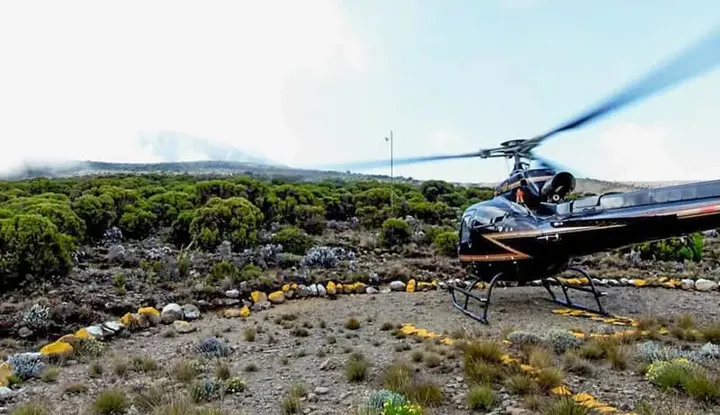
Medical emergency helicopter services on Kilimanjaro function as airborne intensive care units, delivering critical stabilization and rapid descent when altitude illness, injuries, or medical crises threaten climbers’ lives.
Kilimanjaro Medical Emergency Helicopter: Rapid Air Ambulance Response
Kilimanjaro’s extreme altitude and remoteness create medical emergencies that demand specialized response. Severe altitude-related conditions, traumatic injuries from falls, or sudden cardiac events can deteriorate rapidly, requiring descent far faster than ground teams can achieve. Medical emergency helicopters—configured as flying air ambulances—provide the only effective solution in these scenarios.
KiliFlying Air operates Tanzania’s premier medical emergency helicopter service for Kilimanjaro, with aircraft, crews, and protocols purpose-built for high-altitude crises. Our helicopters deliver advanced in-flight care while achieving dramatic physiological relief through rapid descent.
This comprehensive guide examines common medical emergencies requiring helicopter response, air ambulance capabilities, operational procedures, coordination systems, real-world interventions, and why professional services like ours represent the gold standard for climber safety.
Common Medical Emergencies Triggering Helicopter Response
Certain conditions demand aerial evacuation due to time sensitivity:
- Severe altitude illness. High Altitude Pulmonary Edema (HAPE) with fluid-filled lungs or Cerebral Edema (HACE) causing neurological impairment—the most frequent helicopter triggers.
- Traumatic injuries. Fractures, head trauma, or spinal damage from falls on scree, ice, or rocky sections.
- Cardiac emergencies. Heart attacks or arrhythmias exacerbated by exertion and hypoxia.
- Neurological events. Strokes or seizures requiring immediate advanced imaging and care.
- Other critical conditions. Severe hypothermia, dehydration leading to organ failure, or acute infections.
These scenarios share the need for descent measured in minutes, not hours—precisely what medical emergency helicopters deliver.
Air Ambulance Capabilities of Emergency Helicopters
Our helicopters function as fully equipped flying ICUs:
- Medical interiors. Stretchers, oxygen concentrators, ventilators, defibrillators, IV pumps, and medication kits.
- Monitoring equipment. ECG, pulse oximetry, blood pressure, and capnography for real-time patient assessment.
- In-flight interventions. Capability for intubation, chest decompression, fluid resuscitation, and advanced medications.
- Medical crew. Paramedics or physicians experienced in critical care and altitude physiology.
- Hoist rescue. Extraction from terrain without landing zones.
This configuration allows continuous treatment from pickup through hospital handover.
Medical Emergency Helicopter Response Procedure
Activation follows optimized protocols:
- Guide recognizes critical symptoms and provides initial care (oxygen, medications)
- Radio/satellite alert to base with detailed status and GPS
- Operator coordinates medical advisory and insurance authorization
- KiliFlying Air launches high-altitude helicopter
- On-site assessment, advanced stabilization, and extraction
- In-flight critical care during direct hospital routing
Direct insurer partnerships ensure steps 3–4 complete in minutes, enabling industry-leading response times.
Coordination with Medical Facilities
Seamless handover enhances outcomes:
- Pre-alerted receiving hospitals (Moshi KCMC, Arusha, or Nairobi specialists)
- Ground ambulance meet at landing zone
- Full patient report transfer for continuity
- Repatriation staging for international transfer when needed
This end-to-end system minimizes gaps in critical care.
Real-World Medical Emergency Helicopter Interventions
Our operations have directly impacted numerous cases:
- HAPE patients intubated in-flight with full recovery after descent
- HACE cases reaching neurological specialists within golden hour
- Cardiac arrests stabilized with defibrillation during transport
- Complex trauma evacuations with spinal immobilization throughout
These interventions highlight medical emergency helicopter services’ indispensable role.
Frequently Asked Questions
Medical emergency helicopter services on Kilimanjaro save lives through advanced care and speed. Trust professional providers for your safety. Visit our Medical Evacuation page for full details.