Kilimanjaro SAR Helicopter Rescue: Search and Rescue Expertise
Search and Rescue (SAR) operations on Kilimanjaro combine ground teams with helicopter support to locate and extract climbers in distress. KiliFlying Air plays a vital role in these critical missions across the mountain.
Kilimanjaro SAR Helicopter Rescue: Search and Rescue Expertise
While most Kilimanjaro trekkers return safely, a small number become lost, separated from their group, or incapacitated off-trail each year. In these situations, coordinated Search and Rescue (SAR) operations become essential, often requiring helicopter support to cover the mountain’s vast and rugged terrain efficiently.
KiliFlying Air has extensive experience in SAR helicopter missions on Kilimanjaro, working closely with Kilimanjaro National Park (KINAPA) rangers and tour operators. Our pilots and aircraft are equipped for both search patterns and precision extractions in challenging high-altitude conditions.
This guide explains how SAR operations work on the mountain, the role of helicopters, common scenarios, coordination protocols, and steps trekkers can take to minimize risks and aid potential rescues.
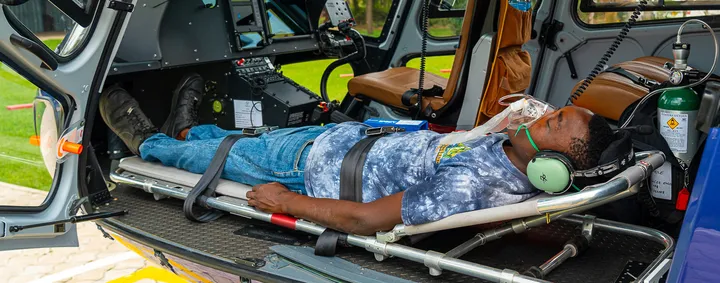
How SAR Operations Are Triggered on Kilimanjaro
SAR missions typically begin when a trekking group reports a missing member at the end of a day’s stage or when a climber fails to reach a checkpoint. Guides immediately notify park rangers and their base camp, who assess whether ground search teams can resolve the issue or if aerial support is required.
Modern technology helps: many operators now equip groups with satellite trackers, and personal locator beacons (PLBs) or devices like Garmin inReach can send distress signals with GPS coordinates, dramatically speeding response times.
The Role of Helicopters in Kilimanjaro SAR
Ground teams are effective in accessible areas, but Kilimanjaro’s size—over 1,700 square kilometers of varied terrain—makes helicopters indispensable for rapid coverage. Our aircraft perform systematic grid searches over remote routes, spot visual markers, and deploy rangers to promising locations.
Once a missing climber is located, the helicopter transitions to rescue mode, either landing nearby or using hoist equipment for extraction from steep or inaccessible spots. This dual search-and-rescue capability often resolves missions that would otherwise take days on foot.
Coordination Between Agencies
Effective SAR relies on tight coordination. Kilimanjaro National Park rangers lead operations, drawing on trail registers, guide reports, and climber itineraries. Tour operators provide detailed group information, while KiliFlying Air supplies aerial expertise and real-time flight data.
International insurance providers may also participate when evacuation coverage is involved, ensuring resources are allocated swiftly. This multi-agency approach has proven highly successful on Africa’s highest peak.
Common SAR Scenarios and Challenges
Climbers may become disoriented in poor visibility, take wrong turns at junctions, or suffer injuries that prevent return. Remote routes like the Northern Circuit or Rongai see occasional incidents due to lower traffic and longer distances between camps.
Weather poses the biggest challenge—low clouds, high winds, or sudden snow can ground helicopters and complicate ground searches. Night operations are limited, emphasizing the need for rapid daytime response.
Prevention Measures for Trekkers
The best way to avoid needing SAR is preparation. Stay with your group and guide at all times, especially during breaks or summit attempts. Carry reliable communication devices and activate tracking features.
Share your exact itinerary and expected checkpoints with family, and consider personal insurance that includes search and rescue coverage. Simple habits like wearing bright clothing and carrying whistles can also aid visibility from the air.
Frequently Asked Questions
Professional SAR helicopter rescue stands ready for Kilimanjaro climbers. Prepare wisely and trek safely. For more on our emergency capabilities, visit the Medical Evacuation page.