Kilimanjaro High Altitude Rescue: Expert Emergency Response
Rescuing climbers at extreme elevations on Mount Kilimanjaro demands specialized skills, equipment, and experience. KiliFlying Air leads in high altitude helicopter rescue operations in Tanzania.
Kilimanjaro High Altitude Rescue: Expert Emergency Response
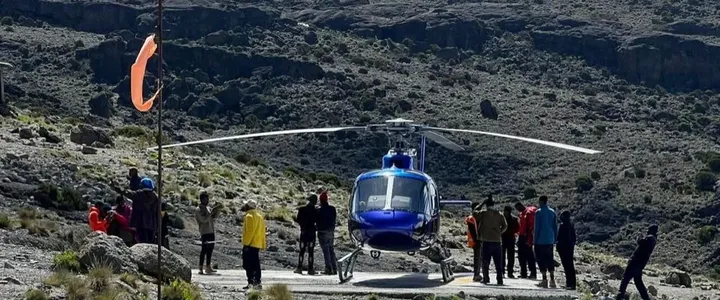
Mount Kilimanjaro’s summit sits at 5,895 meters—one of the highest points reachable by helicopter worldwide. At this altitude, oxygen is scarce, air density is low, and weather can change dramatically. These factors make high altitude rescue one of the most technically demanding operations in aviation medicine.
KiliFlying Air operates Tanzania’s premier high altitude rescue service, with helicopters and pilots specifically certified for extreme elevation performance. We have successfully completed hundreds of rescues from the crater to Barafu Camp and beyond.
This guide explores the unique challenges of high altitude rescue on Kilimanjaro, our specialized capabilities, the rescue process, and how we ensure the best possible outcome for climbers in distress.
The Unique Challenges of High Altitude Rescue
Operating above 5,000 meters presents extreme difficulties:
- Reduced engine power and rotor efficiency due to thin air
- Limited or non-existent landing zones at high camps
- Rapidly changing weather: high winds, clouds, snow
- Increased risk to both patient and crew from hypoxia
- Need for lightweight configuration to maintain performance
Only a handful of helicopter models worldwide are capable of reliable performance at these altitudes. Our fleet is purpose-selected and maintained for this environment.
Our Specialized High Altitude Rescue Fleet
KiliFlying Air uses helicopters proven at extreme elevations:
- Airbus H125 (AS350 B3e) – World record holder for highest landing/takeoff
- Bell 407 – Excellent power-to-weight ratio and reliability
- Equipped with rescue hoist, medical oxygen, stretcher systems
- Regular high-altitude performance testing and maintenance
The High Altitude Rescue Process
Every minute counts. Our streamlined procedure ensures rapid deployment:
- Emergency alert via radio, satellite phone, or beacon
- Immediate coordination with guides and park authorities
- Insurance verification and Guarantee of Payment obtained
- Helicopter launched within minutes of authorization
- Hover extraction or short landing at high camp
- Direct transport to appropriate medical facility
We regularly achieve total rescue times under two hours from alert to hospital arrival.
Common Scenarios Requiring High Altitude Rescue
- High Altitude Cerebral Edema (HACE)
- High Altitude Pulmonary Edema (HAPE)
- Severe trauma from falls or rockfall
- Cardiac events exacerbated by altitude
- Extreme exhaustion or hypothermia
Prevention and Preparation
While we stand ready 24/7, prevention remains key:
- Choose longer routes for better acclimatization
- Monitor symptoms and descend early when needed
- Ensure comprehensive insurance with high-altitude coverage
- Climb with operators experienced in emergency protocols
Frequently Asked Questions
When climbing Kilimanjaro, know that expert high altitude rescue is available 24/7. For more details on our capabilities, visit the Medical Evacuation page or contact our team.