Tanzania High Altitude Rescue: Expert Emergency Services
High altitude rescue in Tanzania addresses emergencies on Kilimanjaro and Mount Meru, where severe altitude illness and injuries demand rapid helicopter medevac. KiliFlying Air delivers specialized, professional response for extreme elevation crises.
Tanzania High Altitude Rescue: Expert Emergency Services
Tanzania hosts Africa’s highest peaks—Kilimanjaro at 5,895 meters and Mount Meru at 4,562 meters—drawing thousands of trekkers annually. These elevations create significant risks of altitude-related illness, with severe cases requiring immediate descent only helicopters can provide efficiently.
High altitude rescue services combine ground response with aerial medevac tailored to extreme elevation challenges. KiliFlying Air leads in Tanzania with helicopters, crews, and protocols optimized for Kilimanjaro and Meru emergencies, achieving consistently rapid and successful outcomes.
This comprehensive guide explores high altitude risks in Tanzania, rescue scenarios on major peaks, helicopter capabilities, response procedures, coordination systems, and why professional services are essential for climber safety.
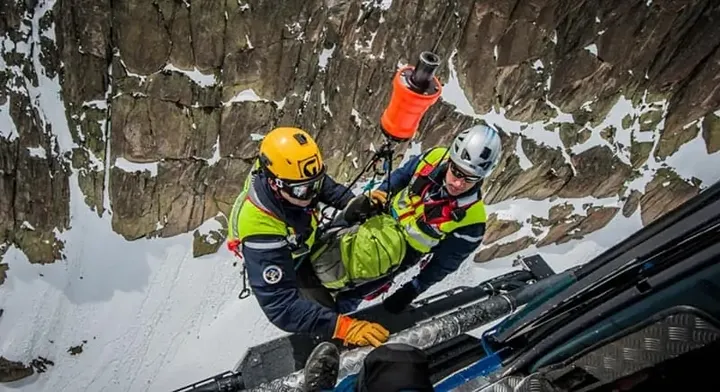
High Altitude Risks in Tanzania
Elevation creates unique physiological threats:
- Kilimanjaro (5,895m). Rapid gain to extreme altitude triggers frequent severe AMS, HAPE, and HACE.
- Mount Meru (4,562m). Steeper profile with volcanic terrain adding injury risks alongside altitude illness.
- Common factors. Cold exposure, exhaustion, and remote location complicating ground evacuation.
These peaks account for nearly all high altitude rescue needs in Tanzania.
Scenarios Requiring High Altitude Rescue
Rescue is activated for time-critical conditions:
- Severe altitude illness. HAPE (lung fluid) or HACE (brain swelling) demanding immediate descent.
- Traumatic injuries. Falls on scree, ice, or rocky sections preventing ground descent.
- Cardiac/neurological events. Exacerbated by hypoxia and exertion.
- Summit-area crises. Critical incidents during final pushes on both peaks.
Helicopter rescue is often the only viable option for rapid physiological relief.
High Altitude Helicopter Capabilities
Specialized aircraft enable operations at extreme elevation:
- Performance margin. Power for operations above 5,000 meters.
- Medical configuration. Oxygen, monitoring, and stabilization equipment.
- Precision tools. Hoist systems for inaccessible zones.
- Crew expertise. Pilots and medical teams trained in mountain and altitude physiology.
KiliFlying Air’s fleet and personnel are purpose-optimized for Tanzania’s high peaks.
High Altitude Rescue Response Procedure
Coordinated activation ensures speed:
- Guide provides initial care and alerts base
- Operator coordinates with park authorities and insurer
- Medical advisory confirms helicopter need
- KiliFlying Air launches high-altitude helicopter
- In-flight care during direct hospital routing
Direct partnerships achieve response times unmatched in the region.
Coverage Across Tanzania’s High Peaks
Services extend to both major mountains:
- Kilimanjaro all routes with access to high camps and crater
- Mount Meru with rapid response to socialist peak and ash cone zones
- Integration with Arusha National Park protocols
Consistent capability across Tanzania’s high-altitude destinations.
Frequently Asked Questions
High altitude rescue in Tanzania protects climbers on Kilimanjaro and Meru with professional helicopter medevac. Trek safely with expert support. Visit our Medical Evacuation page for details.