Kilimanjaro Trek Emergency Evacuation: Professional Safety Response
Emergency evacuation during Kilimanjaro trek delivers coordinated professional response when altitude illness or injuries occur. Combining ground stabilization with rapid helicopter medevac ensures the best outcomes in remote high-elevation environments.
Kilimanjaro Trek Emergency Evacuation: Professional Safety Response
Trekking Kilimanjaro exposes participants to progressive altitude stress over multiple days, with potential for sudden severe illness or injury. While prevention and acclimatization reduce risks, emergency evacuation remains essential for critical cases where time is paramount.
Professional evacuation services integrate trained guides, medical resources, operator coordination, and specialized helicopter medevac. KiliFlying Air provides the aerial component with proven rapid response and advanced in-flight care.
This comprehensive guide explores emergency evacuation needs during treks, common scenarios, ground capabilities, helicopter integration, coordination protocols, route-specific access, and real-world examples of successful interventions.
Common Emergencies During Kilimanjaro Trek
Certain conditions frequently trigger evacuation:
- Severe altitude illness. HAPE/HACE progression unresponsive to treatment.
- Traumatic injuries. Falls on technical sections preventing descent.
- Cardiac events. Exacerbated by hypoxia and exertion.
- Summit-day crises. Critical deterioration during final ascent.
- Exhaustion/inability to descend. Cases requiring assisted evacuation.
These scenarios demand layered emergency evacuation capability.
Ground Evacuation Capabilities
First response on the trail:
- Altitude-trained guides with emergency protocols
- Oxygen, medications, monitoring tools
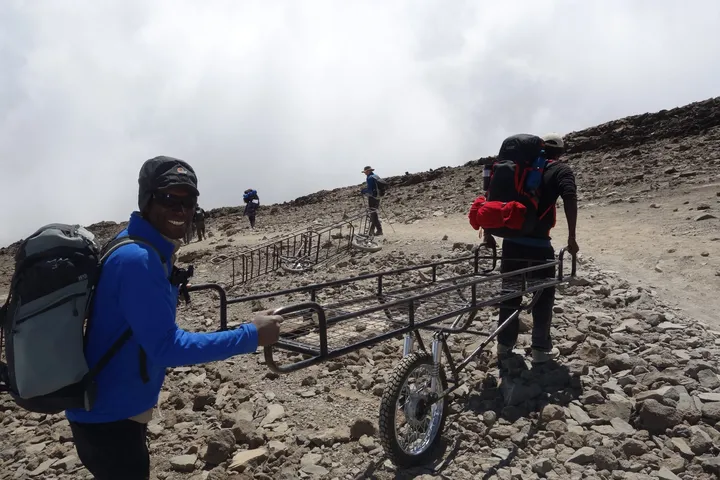
- Stretcher/wheel systems for lower elevations
- Porter teams for assisted descent
Effective for milder cases but limited at extreme altitude.
Helicopter Medevac Integration
Critical for severe emergencies:
- Rapid descent measured in minutes
- In-flight advanced medical stabilization
- Access to high camps and summit zones
- Direct hospital routing
KiliFlying Air delivers this essential aerial layer.
Emergency Evacuation Coordination
Structured activation ensures efficiency:
- Guide initial assessment and care
- Alert to operator base with status/GPS
- Medical advisory and insurance coordination
- Helicopter deployment
- Post-evacuation handover
Direct partnerships achieve minimal delays.
Route-Specific Emergency Evacuation Access
Consistent coverage across trails:
- Machame/Lemosho: Direct high-camp response
- Rongai/Northern Circuit: Reliable remote access
- Marangu: Hut system facilitating coordination
- Summit zones: Nearby extraction capability
Professional services ensure equivalent protection route-wide.
Real-World Emergency Evacuation Impact
Professional response transforms outcomes:
- Hundreds of altitude cases reaching care rapidly
- Trauma evacuations preventing shock
- Summit crises resolved within critical window
- Full recoveries enabled by coordinated care
These interventions underscore emergency evacuation value.
Frequently Asked Questions
Emergency evacuation during Kilimanjaro trek provides essential professional protection. Trek safely with coordinated response ready. Visit our Medical Evacuation page for details.