Kilimanjaro Emergency Response: Coordinated Rescue Guide
Effective emergency response on Kilimanjaro relies on seamless coordination between guides, operators, park authorities, insurers, and helicopter medevac providers. This multi-layered system ensures rapid, professional care when crises occur on the mountain.
Kilimanjaro Emergency Response: Coordinated Rescue Guide
Kilimanjaro’s remote, high-altitude environment demands a sophisticated emergency response framework. While prevention through proper acclimatization and preparation remains priority, the mountain’s scale and risks necessitate robust systems for when things go wrong. Modern response protocols integrate ground teams with aerial evacuation, achieving outcomes unimaginable decades ago.
No single entity handles emergencies alone. Instead, a collaborative network—guides on the ground, tour operators at base, Kilimanjaro National Park (KINAPA) rangers, insurance providers, and helicopter specialists like KiliFlying Air—works in concert to deliver timely intervention.
This comprehensive guide examines the layered structure of Kilimanjaro emergency response, key stakeholders and their roles, detailed activation procedures, integration of helicopter medevac, real-world coordination examples, and factors contributing to consistently successful outcomes.
Key Stakeholders in Emergency Response
Successful rescues depend on specialized roles:
- Climb guides. First responders trained in altitude medicine, oxygen administration, and initial stabilization.
- Tour operators. Central coordination hubs managing communication, logistics, and insurer liaison from base camps.
- Kilimanjaro National Park (KINAPA) rangers. Official oversight, regulatory compliance, and ground support across park boundaries.
- Insurance/assistance providers. Authorize evacuation, coordinate medical advisory, and handle financial guarantees.
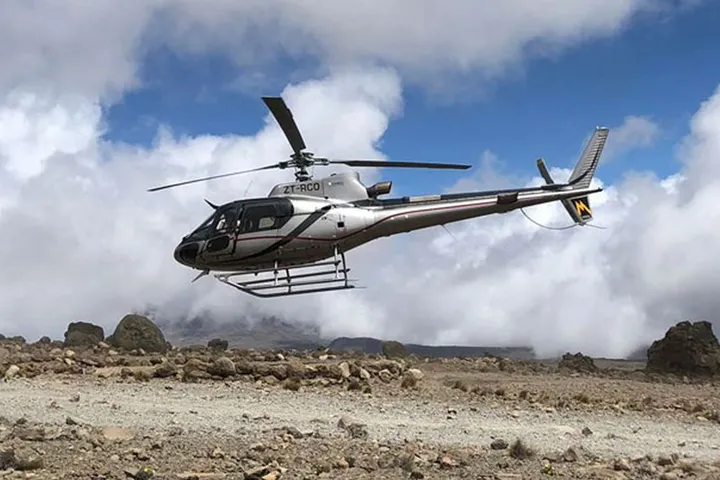
- Helicopter medevac operators (KiliFlying Air). Execute rapid aerial extraction and in-flight medical transport to hospitals.
This distributed responsibility ensures expertise at every stage while maintaining clear command structure.
Emergency Response Activation Procedure
Response follows established protocols refined through experience:
- Guide identifies critical condition (severe AMS, trauma, etc.) and initiates emergency protocol
- Radio/satellite alert to operator base with patient status and precise GPS coordinates
- Operator assesses situation, contacts insurer for medical advisory and authorization
- Insurer confirms coverage and issues Guarantee of Payment
- Helicopter provider (KiliFlying Air) launches high-altitude aircraft
- Concurrent ground measures: oxygen administration, portable hyperbaric bag if available
- Aerial extraction, in-flight stabilization, and direct hospital transfer
Pre-existing partnerships between operators, insurers, and KiliFlying Air streamline steps 3–5, often achieving helicopter launch within minutes of authorization.
Integration of Helicopter Medevac
Helicopter response forms the backbone of rapid intervention:
- High-altitude performance enabling access to camps above 4,500 meters
- Medical interiors with oxygen, monitoring, and stabilization equipment
- Rescue hoist for locations without landing zones
- Direct routing to appropriate hospitals (Moshi, Arusha, or Nairobi)
This aerial capability reduces descent time from days/hours to minutes, dramatically improving outcomes for time-sensitive conditions.
Real-World Coordination Examples
The system’s effectiveness is evident in actual responses:
- Multi-agency handling of simultaneous emergencies during peak season weather events
- Rapid summit-area extractions for HACE cases with full neurological recovery
- Coordinated trauma evacuations from remote routes like Rongai or Northern Circuit
- International repatriation handovers for ongoing specialist care
These cases demonstrate how practiced coordination translates to saved lives and reduced complications.
Factors Contributing to Response Reliability
Consistent performance stems from:
- Mandatory safety standards enforced by KINAPA and reputable operators
- Regular joint training exercises between stakeholders
- Technology integration: satellite communication, GPS tracking, weather monitoring
- Insurance requirements driving professional partnerships
- Experienced local providers like KiliFlying Air with mountain-specific expertise
This ecosystem has evolved significantly, making Kilimanjaro one of the safer high-altitude trekking destinations globally.
Frequently Asked Questions
Kilimanjaro emergency response represents a mature, collaborative system delivering world-class care. Climb with operators integrating these protocols for maximum safety. Contact us or visit our Medical Evacuation page for more information.