Kilimanjaro Climb Helicopter Rescue: Expert Emergency Services
Helicopter rescue during a Kilimanjaro climb is a specialized operation that provides life-saving rapid evacuation when emergencies occur at high altitude. KiliFlying Air leads in delivering professional, efficient helicopter rescue services tailored to the mountain’s unique challenges.
Kilimanjaro Climb Helicopter Rescue: Expert Emergency Services
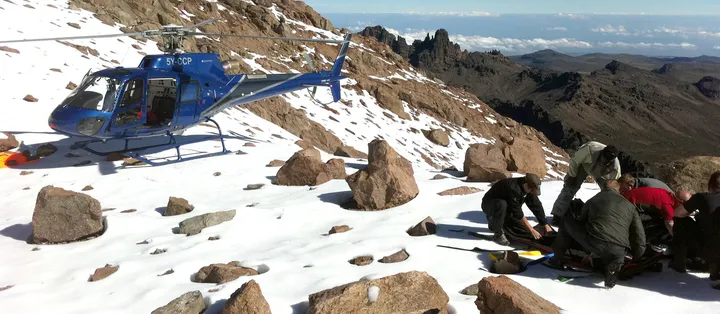
Climbing Kilimanjaro pushes human limits with its demanding terrain and extreme altitude reaching 5,895 meters. While most trekkers complete the journey safely, emergencies do occur—primarily from altitude-related illness but also from injuries or medical events. In these situations, helicopter rescue becomes essential, offering the only practical means of rapid descent from remote high camps.
KiliFlying Air has performed hundreds of successful helicopter rescues on Kilimanjaro, earning recognition for technical expertise, rapid response, and seamless coordination. Our operations integrate advanced aviation capabilities with medical support to deliver patients to hospital care quickly and safely.
This comprehensive guide explores common rescue scenarios during climbs, technical demands of high-altitude helicopter operations, detailed response procedures, fleet and team capabilities, coordination with operators and insurers, and real-world examples of successful interventions.
Common Scenarios Requiring Helicopter Rescue
Helicopter rescue is activated when ground evacuation is too slow or impossible:
- Severe altitude illness. Progression to High Altitude Pulmonary Edema (HAPE) or Cerebral Edema (HACE), affecting breathing or neurological function—the leading cause of rescues.
- Traumatic injuries. Falls on scree slopes, ice fields, or during summit attempts resulting in fractures, sprains, or head trauma.
- Cardiac and medical events. Heart attacks, strokes, or exacerbation of pre-existing conditions triggered by exertion and low oxygen.
- Extreme exhaustion or hypothermia. Cases where climbers cannot continue descent independently.
- Summit-area emergencies. Critical incidents near Uhuru Peak where time to lower altitude is most pressing.
These scenarios highlight why helicopter rescue has become integral to modern Kilimanjaro safety protocols.
Technical Challenges of Climb Helicopter Rescue
Operating helicopters during climbs presents unique difficulties:
- Extreme altitude performance. Air density at 5,000+ meters reduces lift and engine power dramatically.
- Limited landing zones. Few flat areas at high camps require precise hover extractions or short-field operations.
- Weather volatility. Rapid cloud formation, high winds, and whiteouts demand expert judgment.
- Weight constraints. Lightweight configuration essential for performance margin.
- Night and low-visibility capability. Extending operational windows when safe.
Only specialized aircraft and highly trained pilots can consistently overcome these challenges.
Helicopter Rescue Procedure During Climbs
Our established process ensures efficiency:
- Guide recognizes critical symptoms and initiates alert with GPS coordinates
- 24/7 operations center coordinates with operator and insurer
- Guarantee of Payment secured rapidly through partnerships
- High-altitude helicopter launched immediately
- Medical team stabilizes patient during extraction and flight
- Direct transport to advanced hospital facility
This streamlined approach routinely achieves total rescue times under two hours from alert to hospital arrival.
Our Specialized Rescue Fleet and Team
KiliFlying Air maintains purpose-built resources for climb rescues:
- Proven high-altitude helicopters. Airbus H125 (world record holder) and Bell 407 for superior performance.
- Full medical configuration. Stretchers, oxygen systems, defibrillators, monitors, and medications.
- Rescue hoist capability. Essential for inaccessible locations.
- Expert pilots. Thousands of hours in mountain environments with regular training.
- Medical personnel. Paramedics experienced in high-altitude physiology.
Integration with Climb Operators and Insurance
Effective rescue requires tight integration across stakeholders. We maintain direct partnerships with leading operators for shared protocols and training. Insurance coordination through trusted providers eliminates delays, enabling immediate launch when authorized.
This collaborative ecosystem has dramatically improved rescue outcomes on Kilimanjaro over the years.
Real-World Rescue Examples
Our helicopter rescues have directly impacted numerous climbs:
- Summit-day HACE cases evacuated from crater rim with full recovery
- Barafu Camp trauma patients airlifted after falls
- Cardiac events stabilized during flight to cardiac facilities
- Multiple simultaneous rescues during peak season weather events
These interventions demonstrate helicopter rescue’s indispensable role in modern Kilimanjaro safety.
Frequently Asked Questions
Helicopter rescue during Kilimanjaro climbs represents the highest standard of emergency response. KiliFlying Air’s expertise ensures professional care when needed most. Explore our Medical Evacuation services for complete details.