Altitude Sickness Helicopter Kilimanjaro: Rapid Life-Saving Response
Altitude sickness helicopter evacuation on Kilimanjaro provides urgent air ambulance response when severe HAPE or HACE develops. Professional rapid descent with in-flight medical care dramatically improves survival and recovery in high-elevation crises.
Altitude Sickness Helicopter Kilimanjaro: Rapid Life-Saving Response
Altitude sickness on Kilimanjaro progresses from common mild symptoms to life-threatening High Altitude Pulmonary Edema (HAPE) or Cerebral Edema (HACE) in severe cases. When illness escalates despite ground treatment, helicopter evacuation becomes the only effective intervention—providing rapid descent and advanced medical support.
KiliFlying Air specializes in altitude sickness helicopter evacuation, with aircraft and crews optimized for high-elevation operations. Our rapid response routinely saves critical time for climbers experiencing severe symptoms above 4,000 meters.
This essential guide examines altitude sickness progression, recognition of severe cases, ground treatment limitations, helicopter evacuation triggers, air ambulance capabilities, response procedures, and real-world examples of life-saving interventions.
Altitude Sickness Progression and Risks
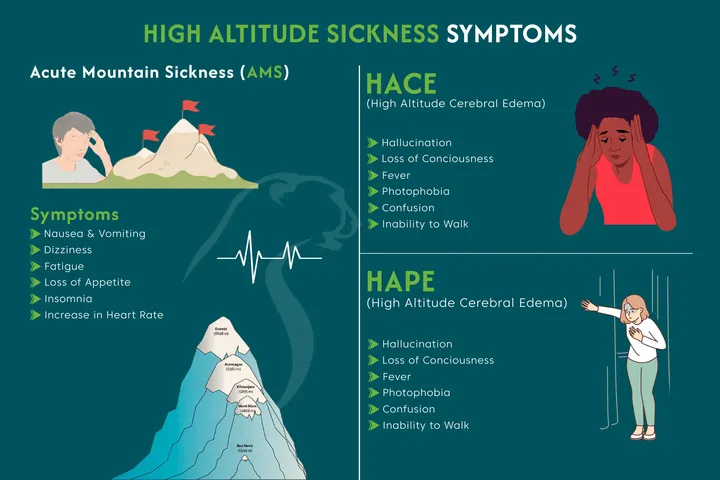
Symptoms escalate with elevation:
- Mild AMS. Headache, nausea, fatigue—common above 3,000m.
- Moderate AMS. Persistent symptoms despite rest/medication.
- HAPE. Fluid in lungs: severe breathlessness, cough, weakness.
- HACE. Brain swelling: ataxia, confusion, hallucinations, coma risk.
Severe forms demand immediate helicopter evacuation.
Recognition of Critical Altitude Sickness
Warning signs requiring medevac:
- Breathlessness at rest
- Cough with pink frothy sputum
- Inability to walk straight (ataxia)
- Severe confusion/altered mental state
- Worsening despite oxygen/rest
Objective assessment drives urgent helicopter response.
Ground Treatment Limitations
On-mountain care has constraints:
- Oxygen/medications provide temporary relief
- Descent from high camps too slow
- Hyperbaric bags limited effectiveness
Helicopter evacuation becomes essential for severe cases.
Helicopter Evacuation for Altitude Sickness
Aerial response delivers critical advantage:
- Rapid descent to therapeutic altitude
- In-flight oxygen and medications
- Advanced monitoring and stabilization
- Direct hospital transfer
KiliFlying Air executes these rescues with proven expertise.
Altitude Sickness Helicopter Evacuation Procedure
Activation follows protocol:
- Guide administers oxygen/medication
- Alert to base with status/GPS
- Operator coordinates insurance
- Helicopter launched for high-altitude mission
- On-site extraction and care
- Hospital delivery
Direct partnerships achieve fastest possible outcomes.
Real-World Impact of Altitude Sickness Helicopter Evacuation
Rapid response has saved numerous climbers:
- HAPE cases reaching hospitals before irreversible damage
- HACE patients with full neurological recovery
- Summit-day emergencies resolved within critical window
- Consistent success across seasons
Helicopter evacuation transforms severe altitude sickness prognosis.
Frequently Asked Questions
Altitude sickness helicopter evacuation on Kilimanjaro provides critical professional response for severe cases. Climb prepared with expert support ready. Visit our Medical Evacuation page for details.