Kilimanjaro Trekking Helicopter Evacuation: Critical Rapid Descent
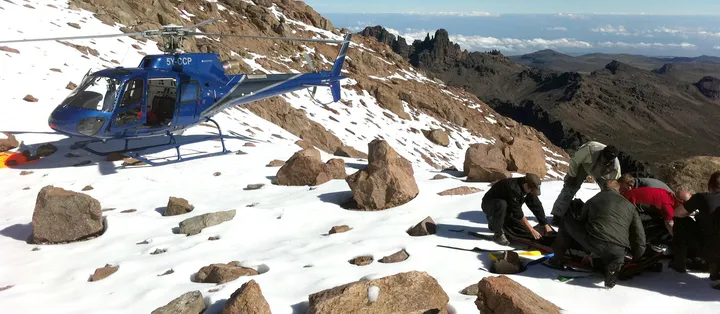
Kilimanjaro trekking helicopter evacuation delivers urgent airlift when altitude sickness, injuries, or exhaustion overwhelm ground descent capabilities. Professional crews execute high-altitude extractions and provide continuous in-flight care to hospitals.
Kilimanjaro Trekking Helicopter Evacuation: Critical Rapid Descent
Trekking Kilimanjaro pushes human physiology to its limits, with over 50% of climbers experiencing some form of altitude sickness and a smaller but significant number requiring emergency evacuation. When symptoms progress to life-threatening stages or injuries immobilize trekkers, helicopter evacuation becomes the fastest and often only viable option.
KiliFlying Air maintains dedicated high-altitude rescue capability, positioning helicopters and medical teams for immediate deployment across all major trekking routes. Years of operational experience have refined procedures for extraction from challenging locations like Barafu Camp, Arrow Glacier, or Crater Camp.
This extensive guide covers evacuation triggers across trek phases, route-specific considerations, landing zone logistics, coordination between guides and air crews, patient handling at altitude, in-flight treatment protocols, and post-evacuation pathways.
Evacuation Triggers by Trekking Phase
Risk evolves with elevation gain:
- Days 1–3 (2,000–3,500m): Dehydration, gastrointestinal issues, minor injuries rarely require airlift
- Days 4–5 (3,500–4,600m): Moderate to severe AMS unresponsive to rest/medication often prompts evacuation
- Summit push (above 4,600m): Rapid onset HAPE/HACE, ataxia, collapse, or trauma demand immediate helicopter response
- Descent phase: Exhaustion, falls causing fractures, or hypothermia complications
Early recognition prevents progression to critical stages requiring airlift.
Route-Specific Evacuation Considerations
Access varies by trail:
- Marangu Route: Established huts and clearer zones facilitate faster landings near Horombo or Kibo
- Machame Route: Barafu Camp (4,670m) has recognized high-altitude pickup points
- Lemosho/Shira: Barranco and Karanga camps offer viable extraction sites
- Rongai: Kibo Camp access requires precise slope selection
- Northern Circuit: Higher camps may need hover extraction due to terrain
- Umbwe: Steep sections complicate ground support but allow direct air access
KiliFlying Air pilots know exact coordinates and terrain features for every major route.
High-Altitude Landing and Extraction Logistics
Technical execution includes:
- Guides clear and mark 20–30m diameter landing zones on slopes
- Helicopters perform high-altitude hover or toe-in landings where full touchdown is impossible
- Crew exits to assist ground team with patient packaging
- Long-line hoist rarely needed due to pilot skill and aircraft power
- Rapid departure to lower altitude within minutes of arrival
Precision operations minimize exposure time at extreme elevation.
Coordination Between Ground and Air Teams
Seamless integration requires:
- Guide transmits precise GPS, wind direction, patient condition, and group size
- Operator relays to KiliFlying Air while initiating insurance approval
- Pilot briefs crew on approach, terrain hazards, and extraction plan
- Ground team signals readiness with colored panels or smoke
- Post-pickup confirmation and group status update
Established communication protocols ensure efficiency under pressure.
Patient Handling and In-Flight Treatment
Medical continuity includes:
- Immediate supplemental oxygen and medication continuation
- Secure stretcher or seating based on injury type
- Continuous monitoring of vitals during rapid descent
- Management of pulmonary/cerebral edema symptoms
- Pain control and fracture immobilization for trauma cases
- Direct handover to waiting ambulance at landing site
Descent rate is controlled to avoid further physiological stress while maximizing speed.
Post-Evacuation Hospital Pathways
Standard transfer routes:
- Primary delivery to modern facilities in Moshi or Arusha
- Hyperbaric chamber access if needed for severe cases
- Onward fixed-wing repatriation for international patients
- Family notification and operator coordination throughout
Streamlined pathways minimize additional transfers.
Frequently Asked Questions
Kilimanjaro trekking helicopter evacuation transforms high-risk situations into manageable outcomes through expert execution. Choose operators partnered with proven air rescue providers. Visit our Medical Evacuation page for comprehensive service information.