Kilimanjaro AMS Evacuation: Critical Response Guide
Acute Mountain Sickness (AMS) is the most common health issue on Kilimanjaro. While mild cases often resolve, severe progression demands swift evacuation. Understanding AMS and response protocols is essential for every climber.
Kilimanjaro AMS Evacuation: Critical Response Guide
Acute Mountain Sickness (AMS) occurs when the body struggles to adjust to reduced oxygen levels at altitude. On Kilimanjaro, rapid ascent profiles mean most climbers experience some symptoms, but in a minority of cases, AMS can progress to life-threatening High Altitude Pulmonary Edema (HAPE) or Cerebral Edema (HACE).
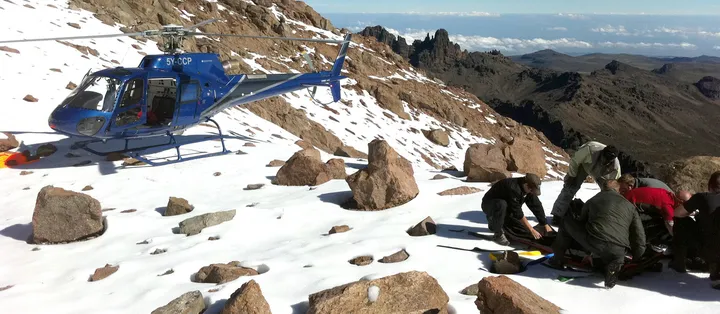
Early recognition and appropriate response are vital. For severe cases, rapid helicopter evacuation provides the fastest descent—the only proven treatment for dangerous forms of altitude illness. KiliFlying Air specializes in these critical high-altitude rescues.
This guide covers AMS symptoms, progression risks, prevention strategies, when evacuation becomes necessary, and how professional helicopter response ensures the best outcomes.
Recognizing AMS Symptoms
AMS typically appears within 12–24 hours of reaching higher elevations:
- Mild AMS. Headache, nausea, fatigue, loss of appetite, and dizziness—similar to a hangover.
- Moderate AMS. Worsening headache unresponsive to medication, vomiting, and increasing weakness.
- Severe progression (HAPE). Shortness of breath at rest, cough (possibly with pink froth), and extreme exhaustion.
- Severe progression (HACE). Confusion, ataxia (inability to walk straight), severe headache, and altered consciousness.
Mild symptoms often improve with rest, hydration, and medication, but any worsening or severe signs require immediate action.
When AMS Requires Evacuation
The decision to evacuate is based on symptom severity and response to initial treatment:
- Persistent moderate symptoms despite rest and medication
- Any signs of HAPE or HACE (life-threatening)
- Inability to keep food/water down leading to dehydration
- Neurological changes or balance issues
In these cases, helicopter evacuation is often the safest and fastest option, especially from high camps where ground descent would take hours.
Prevention Strategies to Reduce AMS Risk
While individual susceptibility varies, proven methods significantly lower AMS incidence:
- Longer routes. 7–9 day itineraries allow better acclimatization than shorter options.
- Slow ascent. Follow “pole pole” pacing and “climb high, sleep low” principles.
- Hydration and nutrition. Drink 3–5 liters daily and eat carbohydrate-rich meals.
- Medication consideration. Acetazolamide (Diamox) can aid acclimatization (consult doctor first).
- Pre-trek preparation. Fitness training and awareness of personal altitude history.
AMS Evacuation Response
When AMS requires evacuation, professional response is critical:
- Guide administers oxygen and medication while alerting base
- Insurance coordination for helicopter authorization
- KiliFlying Air launches high-altitude helicopter
- Rapid descent with in-flight medical support
- Direct transfer to hospital for continued care
Frequently Asked Questions
Understanding AMS and evacuation procedures empowers safer climbing on Kilimanjaro. Prepare wisely and respond promptly. For professional support, visit our Medical Evacuation page.